

From Postmortem Rights to Digital Replicas: Who Owns a Celebrity’s Likeness After Death in the AI Era?
Written by: Divya Lawrance, B.A.LL.B (Hons.) | Christ University Pune Lavasa
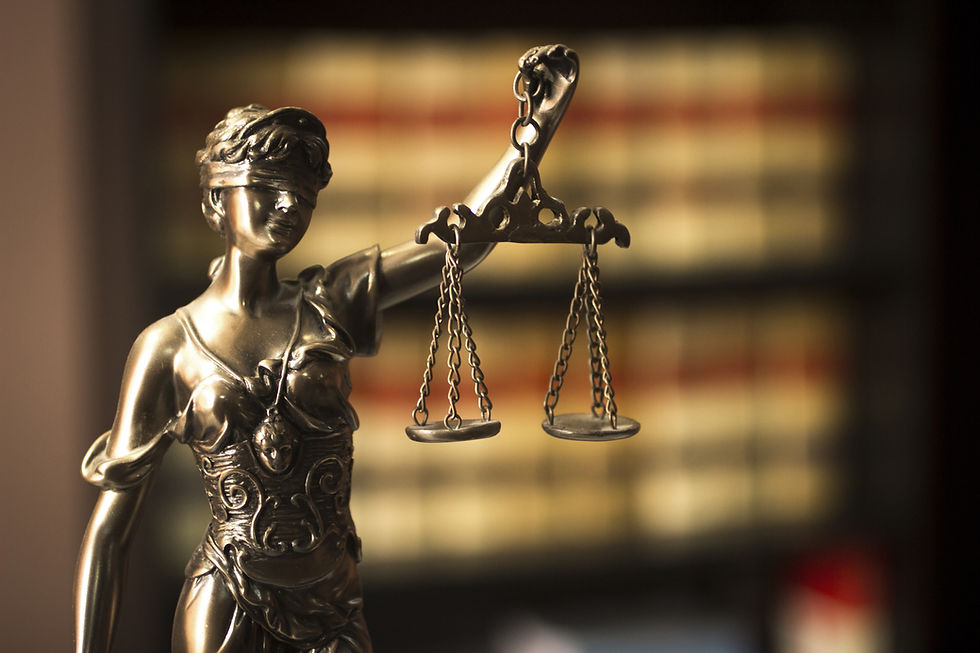
JUSTICE
Introduction
In our generative AI world, the dead are speaking again, sometimes in voices they never did when alive, and sometimes saying things they didn't. A cloned George Carlin makes a joke about the news. An AI-generated Tupac Shakur song is part of a diss. TV channels experiment with voice clones of living celebrities like Al Michaels to cover the Olympics. These "deadbots" and clones raise the question that Who owns a celebrity's rights after death and how do we balance their legacies and free speech in a world where AI can resurrect the dead?
Postmortem publicity rights or the right of publicity have traditionally given estates the right to control how a dead person's name, image, likeness, voice or signature is used for commercial purposes. The right of publicity, unlike only temporary copyright, is a property right that differs in each state and arises from a prohibition on the unauthorised commercial use of another's fame. It's very patchy in the US.[1] But only a limited number provide protection at common law or by statute, and there are differences in the period of the right, whether the right survives a person's death or not and the nature of misuse. The majority of states that protect after death only protect deceased persons whose identities were valuable as a result of commercial exploitation, known as "deceased personalities". Time periods range from as short as 20 years in Virginia to 100 years in Indiana and Oklahoma. Tennessee is the only state that allows the right to continue as long as the estate continues to use it, such as Elvis Presley. Pre-reform New York, among others, offers no postmortem rights because the right is viewed as personal and not transferable upon death. The right is typically inherited by heirs or assigns (successors in interest under will, trust or contract). It can be licensed for endorsements, or used for merchandising, film or holograms. Heirs of musical artists, movie stars, or even Marilyn Monroe have sought to protect or exploit these rights, valuing them at millions for tax reasons[2]. But the system was developed for the problems of the 20th-century posters, ads, even biopics, not AI that generates new performances from data derived from the works.
Digital Replicas or "Deadbots": A Complication
"Digital Replicas" or "Deadbots" are computer-generated simulations, they are extremely realistic voices, facial or live performances of an individual that are so much like the voice or face of the individual that a casual viewer might not notice. They can be used in videos, audio-only or even live performances, or even chatbots. To develop these, lots of the celebrity's existing work could be used to train the model, and there may be an interplay of copyright for the works and publicity rights for the celebrity. George Carlin is an example[3]. In January 2024, the family of the great comedian George Carlin sued the Dudesy podcast for producing a one-hour AI George Carlin special, "George Carlin: I'm Glad I'm Dead". Podcast hosts Will Sasso and Chad Kultgen said they trained AI on Carlin's decades of comedy to create new comedy in his voice about current events. The estate claimed copyright infringement, using copyrighted comedy material without permission and posthumous publicity rights, using Carlin's voice and likeness without permission. The case was resolved rapidly: the special was taken down from YouTube and podcasting platforms, and a court ruling means Carlin's voice, likeness, and image can't be used without permission in the future. The agreement didn't stipulate any payment but did show how estates can sue over AI "resurrections" that may constitute a form of identity theft, if they wish, using current copyright and other laws.[4]
Another example was Tupac's estate. In 2024, Drake dropped the diss song with AI Tupac (and Snoop Dogg) singing, "Taylor Made Freestyle". The estate issued a cease-and-desist because they argued it was a "flagrant infringement" of Tupac's right of publicity and a "blatant misappropriation" of Tupac's brand, particularly given the use of AI Tupac appeared to be an attack on Kendrick Lamar, whom they supported. [5]The case didn't go to court but the incident highlighted the use of the dead to participate in cultural conversations without their consent, which can involve defamation and rewriting history.
Even when permitted, AI is problematic. Television broadcaster NBC asked and received Al Michaels' consent to use his distinctive voice for "tailored" Olympic commentary on Peacock for the 2024 Paris Games. Michaels claimed he was "frightened and astonished" to hear it, but it is "the way of the future". This is different because Michaels is alive and consenting, but a taste of what may come in the future when he passes away: if his estate approves or rejects using voice cloning for other purposes? It makes me wonder if families will choose money over "art" or the dead person's wishes. There are a lot of fakes out there. Michael Jackson, Bob Marley and Tupac deadbots have been created in AI videos, performing at award ceremonies or drifting down the street. They are fan art or parody, they are used for advertising and selling merchandise. Zelda Williams has taken a dislike to "deadbots" of her father Robin, saying on the New York Post he would not approve. These non-commercial or semi-commercial uses present a problem: publicity rights generally apply only to commercial use, while pure art or non-commercial use of "deadbots", such as grief chatbots, will fall in the grey areas.[6]
New York and California's New Laws
The use of laws has grown in India, with entertainment capitals boosting the use of laws. New York, historically lacking on postmortem rights, enacted a 2020 law to protect deceased performers and personalities (commercial value at death) in the state. It's for 40 years, and protects not only against commercial use of name, voice, signature or likeness, but also against potentially deceptive uses of a convincing digital replica in an audiovisual work including sound recordings and clearly disclosing that the replica is not the person can help. Amendments broadened "deceased performer" and "deceased personality" terms, extended the consent provisions for using a digital replica in an audiovisual work including sound recordings and liability when not for commercial use but include some expressions with generous First Amendment protections for parody, satire, commentary and criticism, documentaries and biographies, with limits on deceptive use. The changes are respectful of AI and also freedom of speech.[7]
California, which has more of a focus on death-related rights 70 years after death under Civil Code § 3344.1 for deceased personalities who lived in California, enacted legislation in 2024. [8]The amendment explicitly prohibits the creation, sale or offer of a digital replica of a deceased personality's voice or image in audiovisual or audio expressive works without the consent of a deceased personality or his or her heirs. This is punishable by the greater of $10,000 or damages. It provides exemptions for news, commentary, parody or de minimis and transformative uses, but aims to avoid unauthorised AI performances, which may replace or distort the original performer's voice. There were other laws, such as AB 2602, dealing with contracts of living performers for digital replicas. These laws modernise but are patchy. They protect primarily those of commercial value and/or who live in the state, creating a mosaic. Federal laws, such as the NO FAKES Act, have been proposed but there is no consistency. In other jurisdictions there are various approaches including the EU AI Act which takes a risk-based approach to high-impact AI, but doesn't deal with publicity after death.[9]
Celebrities and their estates.
AI highlights the need for celebrities, sports stars and other famous people to have estate plans. Rights of publicity can be profitable for example, they can generate income - but they can also be harmful. Familles should Actively include rights of publicity in wills, trusts, or separate publicity rights agreements, identifying who can use and how, which uses are approved, disapproved e.g., political endorsements or "deepfake" (re-enactments inconsistent with an individual's typical values), limit AI data uses or ban some uses e.g., political ads, controversial endorsements, "deepfakes" inconsistent with a person's typical values, use trusts to manage licensing (perhaps with instructions to favour legacy and legacy over profits like Prince's or Robin Williams' estates). For athletes, the boom in their NIL name, image, likeness rights in college sports and endorsement opportunities will be an issue. After a career ends or at death, AI could re-enact plays or commentary or even product endorsements. Geography matters plan for California or New York law, or choose law. The concerns included enforcement worldwide against AI, commercial/not and compensation if a "deepfake" somehow "harms" a legacy in some intangible manner. Deadbots for grief or education raise issues beyond property law, such as distressing families, or abusing the media.
Legacy v. Expression
It's a philosophical constitutional issue. The right of publicity protects against the commercial misuse of celebrity, but the first amendment protects against parody, satire, reporting the news, biographies and transformative art. You can make a computer Tupac not a Tupac sneaker. It's misappropriation to make a computer Carlin special, duplicating his show. It's a tricky area. Too much may stifle art: biographies, dramas or even comedies about celebrity culture using deepfakes. Too little will see the dead exploited by scam artists, or families diminished by the dead. This may lead to branding, family and "haunting" problems if the digital clones don't fit with the ethical values of the deceased. There are many examples of unauthorised clones: videos, tributes that employ AI to draw audiences or chatbots that communicate with the dead for healing or fun. Some could be artistic, some could be deceptive or exploitative. Zelda Williams's reaction to AI clones of her father illustrates the human impact: AI clones are not real but they are real to fans and family. [10]
Conclusion
Finally, AI needs new rules. Families can issue AI licences. Businesses can provide consent or watermarking of AI. Society should remind us "resurrection" of the dead is a technological not moral right - the autonomy or preference of the dead should be respected. AI has "should we?" and "who decides?" The dead and their families are not powerless, and can be revered without innovation strangulation with some smart thinking and clever law-making. Ghosts can't talk; the law and common sense can save them, and shield them from being crushed and dismembered. When it comes to privilege and entitlement, remember fame is temporary, reputation and respect are permanent. No selling of ghosts, telling of tales.
[2] Shyamkrishna Balganesh & Eric T. Schlachter, Postmortem Publicity Rights at the Property‑Personality Divide, 98 Ind. L.J. 1257 (2024).
[3] Anna M. Smith, Generative AI, Copyright and Personality Rights: A Comparative Study, 2 IJLIDA 45 (2025)
[4] Samantha Murphy Kelly, George Carlin’s Estate Settles Lawsuit Over AI-Generated Comedy Special, The Guardian, Apr. 3, 2024, https://www.theguardian.com/technology/2024/apr/03/george-carlin-dudesy-podcast-ai-lawsuit.
[5] The Post‑Mortem Right of Publicity: Defining It, Valuing It, Defending It and Planning for It, 48 ACTEC L. J. 125 (2022).
[6] Dani Di Placido, Robin Williams’ Daughter Condemns AI‑Generated Videos Of Her Father, Forbes, Oct. 7, 2025, https://www.forbes.com/sites/danidiplacido/2025/10/07/robin-williams-daughter-condemns-ai-generated-videos-of-her-father/.
[7] Lothar Determann et al., New York Expands Its Right of Publicity Statute and Tackles Digital Replicas, DWT Alert (Dec. 11, 2020), https://www.dwt.com/insights/2020/12/new-york-post-mortem-right-of-publicity.
[8] Cal. Civ. Code § 3344.1 (West 2025).
[9] SpicyIP, Rest in IP: Posthumous Personality Rights in the Age of Deepfakes (Mar. 15, 2026), https://spicyip.com/2026/03/rest-in-ip-posthumous-personality-rights-in-the-age-of-deepfakes.html.
[10] Mondaq, The Living Dead: Looking at Posthumous Celebrity Rights Across Jurisdictions (Oct. 21, 2024), https://www.mondaq.com/india/court-procedure/1533910/the-living-dead-looking-at-posthumous-celebrity-rights-across-jurisdictions.


Comments